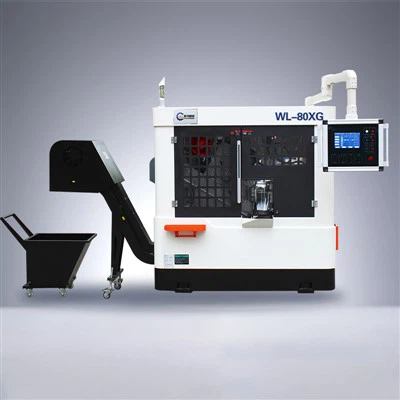
As a supplier of Circular Saw Machine CNC, I've encountered numerous inquiries from potential customers regarding the operational requirements of these sophisticated machines. One question that frequently arises is whether a Circular Saw Machine CNC demands special training to operate. In this blog, I'll delve into this topic, exploring the nature of these machines, the skills needed for operation, and the importance of proper training.
Understanding Circular Saw Machine CNC
Circular Saw Machine CNC represents a significant advancement in cutting technology. These machines combine the precision of computer numerical control (CNC) with the power of circular saws, enabling highly accurate and efficient cutting operations across a wide range of materials, including metals, plastics, and wood.
The Automatic Circular Saw Machine For Metal Cutting is a prime example of such technology. It is designed to handle various metal cutting tasks with remarkable speed and precision. The machine's CNC system allows for the programming of complex cutting patterns, ensuring consistent results even for high - volume production runs. Similarly, the Automatic CNC cold circular saw machine is engineered for cold cutting of metals, which helps to preserve the material's integrity and reduce heat - related distortion. And the Aluminum Circle Cutting Machine is specifically tailored for cutting aluminum circles with high precision, catering to industries such as automotive and aerospace.
Skills Required for Operating Circular Saw Machine CNC
Basic Technical Skills
Operating a Circular Saw Machine CNC does require a certain level of technical proficiency. First and foremost, operators should have a basic understanding of CNC programming. This involves learning how to read and write G - code, the language used by CNC machines to control their movements. G - code specifies the tool path, feed rate, and other parameters necessary for a successful cutting operation. For example, an operator needs to know how to program the machine to move the saw blade along a specific trajectory to achieve the desired cut shape.
In addition to programming, operators must be familiar with the machine's control panel. Different models of Circular Saw Machine CNC may have slightly different control interfaces, but they generally include buttons, touchscreens, and displays for inputting commands and monitoring the machine's status. Operators should be able to navigate these interfaces to set up the machine, start and stop operations, and troubleshoot minor issues.
Safety Knowledge
Safety is of utmost importance when operating any industrial machine, and Circular Saw Machine CNC is no exception. Operators need to be well - versed in safety procedures to prevent accidents and injuries. This includes wearing appropriate personal protective equipment (PPE), such as safety glasses, gloves, and ear protection. They should also understand how to properly install and secure the saw blade to prevent it from coming loose during operation.
Moreover, operators need to be aware of the potential hazards associated with the machine, such as sharp blades, moving parts, and electrical components. They should know how to shut down the machine in case of an emergency and how to perform regular safety checks on the equipment.
Material Knowledge
Since Circular Saw Machine CNC can cut a variety of materials, operators should have a good understanding of the properties of different materials. For example, metals have different hardness, ductility, and thermal conductivity, which can affect the cutting process. Softer metals may require a different cutting speed and feed rate compared to harder metals. Wood and plastics also have their own unique characteristics that need to be considered when programming the machine for cutting.
The Importance of Special Training
Ensuring Safety
Special training plays a crucial role in ensuring the safety of operators. A comprehensive training program will cover all aspects of safety, from the proper use of PPE to emergency procedures. By learning about potential hazards and how to avoid them, operators can significantly reduce the risk of accidents in the workplace. For instance, during training, operators will be taught how to handle the saw blade safely, which can prevent cuts and lacerations.
Maximizing Machine Performance
Proper training enables operators to make the most of the capabilities of Circular Saw Machine CNC. When operators are well - trained in CNC programming and machine operation, they can optimize the cutting parameters to achieve the best possible results. This includes selecting the appropriate cutting speed, feed rate, and tool path for different materials and cutting tasks. As a result, the machine can operate more efficiently, with reduced waste and higher productivity.


Reducing Maintenance Costs
Well - trained operators are also more likely to perform regular maintenance on the machine, which can help to extend its lifespan and reduce maintenance costs. Training programs typically include instruction on machine maintenance, such as blade replacement, lubrication, and cleaning. By following these maintenance procedures, operators can prevent premature wear and tear of the machine's components, avoiding costly breakdowns and repairs.
Types of Training Available
Manufacturer - Provided Training
As a Circular Saw Machine CNC supplier, we offer comprehensive training programs for our customers. Our training courses are designed by experienced engineers and technicians who have in - depth knowledge of our machines. These courses typically include both theoretical and practical components. In the theoretical part, operators learn about the machine's working principles, CNC programming, and safety procedures. In the practical part, they get hands - on experience operating the machine under the supervision of our experts.
Online Training
In addition to on - site training, we also provide online training resources. These resources include video tutorials, user manuals, and online forums where operators can ask questions and get support. Online training is a convenient option for customers who may not be able to attend on - site training due to geographical or time constraints.
Conclusion
In conclusion, operating a Circular Saw Machine CNC does require special training. The combination of technical skills, safety knowledge, and material understanding needed to operate these machines effectively cannot be acquired through casual learning. Special training not only ensures the safety of operators but also maximizes the machine's performance and reduces maintenance costs.
If you're in the market for a Circular Saw Machine CNC and are interested in learning more about our products and training programs, we encourage you to contact us for a detailed discussion. Our team of experts is ready to assist you in finding the right machine for your needs and providing the necessary training to ensure a successful operation.
References
- "CNC Machining Handbook" by John Doe
- "Safety Guidelines for Industrial Machine Operation" by Industrial Safety Association
- "Materials Science for Machining" by Jane Smith