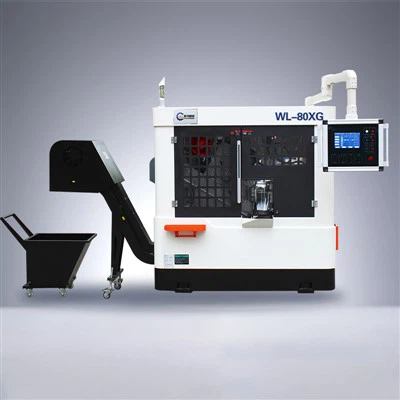
Hey there! I'm a supplier of saw circular machines, and I often get asked, "Does a saw circular machine require special training to operate?" Well, let's dive right into this topic and break it down.
First off, what exactly is a saw circular machine? These machines are pretty handy in a bunch of industries. They're used for cutting all sorts of materials, like wood, metal, and plastic. There are different types too, such as the Large size metal cutting circular saw, Circular Low Saw, and Circular Saw Steel Machine. Each type has its own features and functions, but they all share the basic principle of using a circular blade to make cuts.
Now, back to the question: does it need special training? The short answer is yes, and here's why.
Safety first! Saw circular machines can be dangerous if not used properly. The spinning blade can cause serious injuries, like cuts, amputations, or even eye damage. Special training teaches operators how to handle the machine safely. They learn about things like wearing the right safety gear, which usually includes safety glasses, gloves, and ear protection. Training also covers how to set up the machine correctly, like adjusting the blade height and speed according to the material being cut. For example, cutting metal requires a different blade speed compared to cutting wood. If you don't set it right, you could damage the blade, the material, or even the machine itself.
Accuracy matters. To get precise cuts, you need to know how to operate the machine effectively. Training helps operators understand how to measure and mark the material accurately before making a cut. They also learn how to control the feed rate, which is how fast the material is fed into the blade. If the feed rate is too fast, the cut might be rough and inaccurate. If it's too slow, it can waste time and put unnecessary stress on the machine.
Maintenance is key. A well - maintained saw circular machine lasts longer and performs better. Special training includes lessons on how to clean and lubricate the machine regularly. Operators learn how to check the blade for wear and tear and when to replace it. They also know how to troubleshoot common problems, like a blade that's not cutting straight or a machine that's making strange noises. By taking good care of the machine, you can avoid costly breakdowns and keep your production running smoothly.
Let's talk about the different levels of training.
Basic training is usually the first step. It's designed for new operators and covers the fundamentals of machine operation and safety. This might be a one - day or a few - hour course, depending on the complexity of the machine. During basic training, operators learn how to turn the machine on and off, how to load and unload the material, and the basic safety rules.
Advanced training is for more experienced operators. It goes deeper into topics like advanced cutting techniques, such as bevel cuts and compound cuts. Operators also learn about programming the machine if it's a computer - controlled model. This type of training can take several days or even weeks, but it gives operators the skills they need to handle more complex jobs.
On - the - job training is also common. This is when an experienced operator trains a new one while they're working. It's a hands - on approach that allows the new operator to learn in a real - world setting. However, it's still important to have some formal training first to make sure the new operator has a solid foundation of knowledge.
Some people might think that they can just learn to operate a saw circular machine by watching someone else or by reading the manual. While these can be helpful, they're not a substitute for proper training. Watching someone else might not show you all the little details and tricks that you need to know. And reading a manual can be confusing, especially if you're new to the machine.


In conclusion, special training is definitely necessary for operating a saw circular machine. It ensures the safety of the operators, the accuracy of the cuts, and the longevity of the machine.
If you're in the market for a saw circular machine, whether it's the Large size metal cutting circular saw, Circular Low Saw, or Circular Saw Steel Machine, and you're worried about training your staff, don't fret. We can provide training resources to help your operators get up to speed quickly.
We're always here to support you. If you have any questions about our saw circular machines or the training options, feel free to reach out. We'd love to have a chat with you and discuss how we can meet your specific needs. Whether you're a small workshop or a large manufacturing plant, we have the right machine and training solutions for you. So, don't hesitate to contact us and start a conversation about your saw circular machine requirements.
References
- General safety guidelines for industrial machinery
- Manufacturer's manuals for saw circular machines