

Hey there! As a supplier of Circular Low Saws, I'm often asked about various factors that can affect the performance of these handy tools. One question that comes up quite a bit is how the blade rotation direction impacts the cutting performance. So, let's dive into it and explore this topic in detail.
Understanding Blade Rotation Direction
First things first, let's talk about what we mean by blade rotation direction. In simple terms, a Circular Low Saw's blade can rotate either clockwise or counter - clockwise. This might seem like a small detail, but it can have a surprisingly big impact on how well the saw cuts.
Chip Removal
One of the key aspects affected by the blade rotation direction is chip removal. When the blade rotates in the right direction, it can effectively push the chips away from the cutting area. For example, if the blade rotates in a direction where it creates an upward and outward force on the chips, the chips are more likely to be ejected from the cut.
In a clockwise - rotating blade, the chips are often pushed up and out of the cut on one side. This is great because it prevents the chips from getting packed in the cut, which can cause the blade to overheat and slow down the cutting process. On the other hand, a counter - clockwise rotation might be more suitable for certain materials or cutting setups where chips need to be directed in a different way.
Some of you might be wondering, why is chip removal so important? Well, if chips build up in the cut, they can act as a barrier between the blade and the material being cut. This increases friction, which not only makes the cutting process harder but also wears out the blade faster. So, having the correct blade rotation for optimal chip removal can significantly extend the life of your blade and keep your cutting operations running smoothly.
Cutting Force and Stability
The blade rotation direction also affects the cutting force and how stable the saw is during operation. When the blade rotates in a direction that aligns with the natural way the material wants to be cut, it can reduce the amount of force needed to make a cut.
For instance, when cutting through wood, a clockwise - rotating blade might work better because it can follow the grain of the wood more effectively. This reduces the chances of the wood splintering or the blade getting stuck. In contrast, when cutting metal, the optimal rotation direction might depend on the type of metal and its hardness. A counter - clockwise rotation could provide more stability and a cleaner cut in some cases.
Stability is crucial when using a Circular Low Saw. If the saw isn't stable during cutting, it can lead to inaccurate cuts and even pose a safety risk. The right blade rotation can help keep the saw steady by distributing the cutting forces evenly across the blade and the material being cut.
Surface Finish
Another important factor is the surface finish of the cut. The blade rotation direction can influence how smooth or rough the cut surface turns out. A well - chosen rotation direction can minimize tear - out and leave a cleaner edge.
When the blade rotates in a direction that allows it to cut through the material with less resistance, it can create a finer surface finish. This is particularly important in applications where the appearance of the cut is crucial, such as in woodworking for furniture or in metalworking for precision parts.
For example, in woodworking, a blade that rotates in a way that cuts against the grain at the end of the cut can cause splintering. By adjusting the rotation direction, you can often achieve a much cleaner and more professional - looking cut.
Different Types of Cutting Operations
Depending on the type of cutting operation you're doing, the ideal blade rotation direction can vary. Let's take a look at a few common scenarios:
Rip Cutting
Rip cutting involves cutting a piece of material along its length. In rip cutting wood, a clockwise - rotating blade is often preferred. This rotation allows the blade to follow the wood grain more easily, reducing tear - out and making the cutting process faster.
In metal rip cutting, the choice of rotation might depend on the metal's properties. For softer metals, a clockwise rotation could work well as it allows for efficient chip removal. However, for harder metals, a counter - clockwise rotation might offer better control and a more precise cut.
Cross Cutting
Cross cutting is when you cut a piece of material perpendicular to its length. In this case, the blade rotation direction can have a big impact on the surface finish. For wood, a counter - clockwise rotation might be better as it can help prevent splintering at the end of the cut.
In metal cross cutting, the rotation direction needs to be chosen based on the metal's thickness and hardness. A clockwise rotation can be good for thin metals as it can quickly remove chips, while a counter - clockwise rotation might be more suitable for thicker metals to ensure a clean and accurate cut.
Our Product Offerings
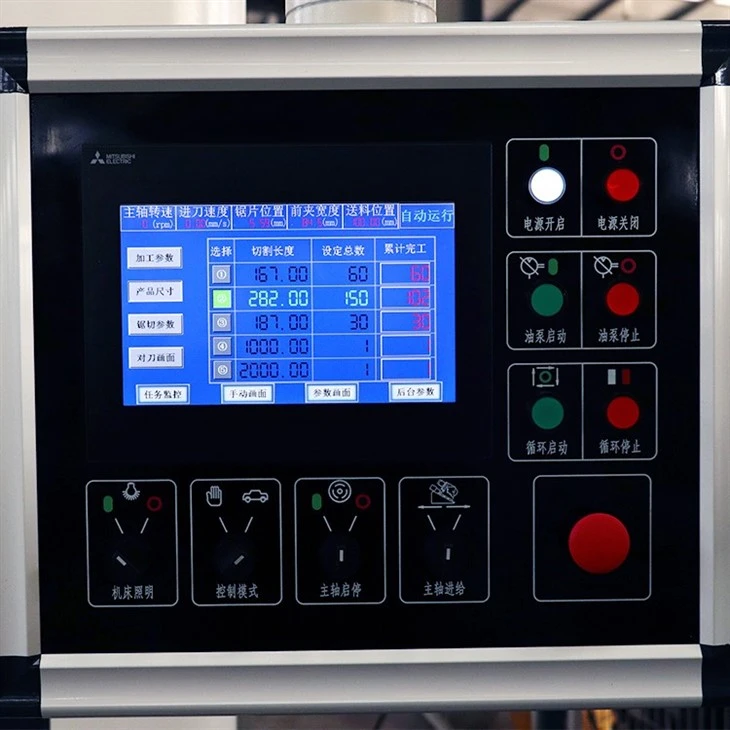
As a Circular Low Saw supplier, we understand the importance of blade rotation direction and how it impacts cutting performance. That's why our saws are designed to offer flexibility in blade rotation. Our Automatic Carbide Circular Saw Cutting Machine is a great example. It allows you to adjust the blade rotation direction according to your specific cutting needs.
This machine is ideal for high - volume cutting applications, whether you're working with wood or metal. It comes with advanced features that ensure efficient chip removal and a stable cutting process, regardless of the blade rotation direction you choose.
If you need a saw for faster cutting, our High Speed Circular Sawing Machine is a top - choice. This machine is built to handle a variety of materials at high speeds. With the ability to adjust the blade rotation, you can optimize the cutting performance for different types of cuts.
And if you're specifically looking to cut round steel quickly, our High Speed Circular Saw Cut Round Steel Fast is the perfect solution. It's designed to make precise cuts on round steel with the right blade rotation for efficient chip removal and a smooth cutting operation.

Conclusion
In conclusion, the blade rotation direction of a Circular Low Saw plays a vital role in its cutting performance. From chip removal to surface finish, the right rotation can make a huge difference in how well your saw works. As a supplier, we're committed to providing you with saws that offer the flexibility to adjust the blade rotation according to your specific needs.
If you're in the market for a Circular Low Saw or want to learn more about how blade rotation can impact your cutting operations, don't hesitate to reach out. We're here to help you make the best choice for your business. Whether you need advice on the right blade rotation for a particular material or want to explore our product range, we're just a message away. Let's start a conversation and find the perfect saw solution for you!
References
- [1] "Cutting Tool Engineering Handbook," 3rd Edition.
- [2] "Woodworking Machinery and Processes," by R. Bruce Hoadley.
- [3] "Metal Cutting Principles," by Peter K. Wright.


