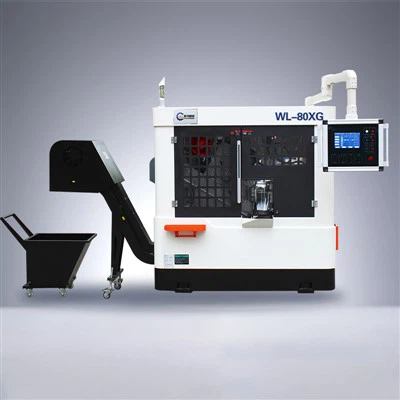
Is it possible to upgrade a pipe cutting machine?
As a dedicated provider of Pipe Cutting Machine, I often encounter inquiries from clients about the possibility of upgrading their existing pipe cutting machines. This topic is not only relevant to our customers looking to enhance their equipment's efficiency but also crucial for the overall advancement of industrial cutting operations. In this blog, I will delve into the feasibility of upgrading pipe cutting machines, exploring the technical aspects, benefits, and considerations involved.


Technical Feasibility
The possibility of upgrading a pipe cutting machine largely depends on its design, age, and technological level. Modern pipe cutting machines, especially those equipped with advanced control systems, generally offer better upgrade potential. For instance, CNC (Computer Numerical Control) based machines can often have their software updated to improve cutting precision, increase automation levels, or add new cutting functions.
1. Software Upgrades
One of the most common and accessible upgrades for pipe cutting machines is software improvement. A simple software update can bring significant enhancements to the machine's performance. For example, a new software version might optimize the cutting path algorithm, reducing cutting time and material waste. It could also enhance the user interface, making it more intuitive and easier to operate. This type of upgrade is often less expensive and can be completed relatively quickly, with minimal disruption to production.
2. Hardware Upgrades
Hardware upgrades, on the other hand, are more complex but can offer even more substantial improvements. These upgrades can include replacing old cutting tools with more advanced ones, such as high - speed steel or carbide blades, which can increase cutting speed and quality. Additionally, upgrading the drive system or the hydraulic components can improve the machine's stability and power efficiency. For example, upgrading to a more powerful motor can handle larger - diameter pipes or increase the cutting feed rate.
However, hardware upgrades may require more technical expertise and potentially longer downtime for the machine. It is essential to ensure that the upgraded hardware is compatible with the existing machine structure and control system.
Benefits of Upgrading
There are several compelling reasons to consider upgrading a pipe cutting machine, which can have a positive impact on both productivity and cost - effectiveness.
1. Enhanced Productivity
Upgrading can lead to a significant increase in productivity. With faster cutting speeds, more accurate cutting paths, and reduced setup times, the machine can process more pipes in a shorter period. For example, a software upgrade that optimizes the cutting sequence can minimize the time between cuts, while a hardware upgrade to a more efficient cutting tool can reduce the actual cutting time per pipe.
2. Improved Quality
Upgraded machines often produce higher - quality cuts. Newer cutting tools and advanced control systems can ensure more precise cuts, with smoother edges and fewer burrs. This is crucial for applications where the quality of the cut pipe is critical, such as in the automotive, aerospace, or plumbing industries.
3. Cost Savings
Although upgrading a pipe cutting machine requires an initial investment, it can lead to long - term cost savings. By improving productivity and reducing material waste, the machine becomes more cost - effective to operate. Additionally, upgraded machines may have lower maintenance requirements and longer service lives, reducing the overall cost of ownership.
Considerations Before Upgrading
Before deciding to upgrade a pipe cutting machine, there are several factors that need to be carefully considered.
1. Machine Age and Condition
The age and current condition of the machine play a significant role in the upgrade decision. An older machine with significant wear and tear may not be a good candidate for upgrade, as the cost of upgrading may be close to or even exceed the cost of purchasing a new machine. In such cases, a thorough assessment of the machine's overall condition by a professional technician is necessary.
2. Compatibility
As mentioned earlier, compatibility is a crucial consideration. When upgrading either the software or hardware, it is essential to ensure that the new components are fully compatible with the existing machine. This may require consulting the machine's manufacturer or a qualified technical expert.
3. Return on Investment (ROI)
Calculating the potential return on investment is essential. This involves estimating the cost of the upgrade, including parts, labor, and any associated downtime, and comparing it with the expected benefits, such as increased productivity, improved quality, and cost savings. A positive ROI indicates that the upgrade is a worthwhile investment.
Our Company's Offerings
At our company, we understand the importance of providing comprehensive solutions for our customers' pipe cutting needs. We offer a range of CNC Fully Automatic Circular Saw Machine and Sawing And Cutting Dual - purpose Sawing Machine that are designed with upgradeability in mind. Our experienced technical team can provide professional advice on whether an upgrade is suitable for your existing machine and can assist with the entire upgrade process, from planning to implementation.
If you are considering upgrading your pipe cutting machine or exploring new options for pipe cutting equipment, we encourage you to contact us. Our team will be happy to discuss your specific requirements and provide customized solutions to optimize your production process. Don't hesitate to take the next step towards improving your pipe cutting operations.
References
- Smith, J. (2020). Advantages of Upgrading Industrial Cutting Machines. Journal of Manufacturing Technology.
- Johnson, M. (2019). The Impact of Software Upgrades on CNC Machining. Proceedings of the International Conference on Machine Tools and Manufacturing.
- Brown, A. (2021). Evaluating the Return on Investment for Machine Upgrades. Industrial Engineering Magazine.