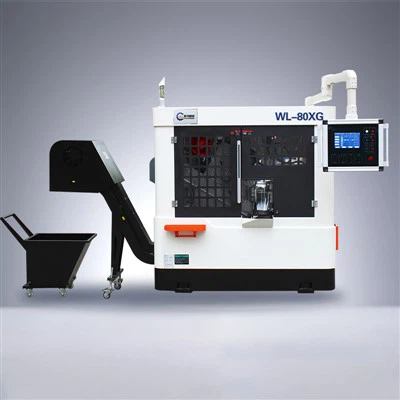
In the realm of metal cutting, the choice between an automatic cold saw and a regular saw can significantly impact the efficiency, precision, and overall quality of the cutting process. As a supplier of automatic cold saws, I've witnessed firsthand the distinct advantages that these machines offer over their regular counterparts. In this blog post, I'll delve into the key differences between automatic cold saws and regular saws, exploring their unique features, applications, and benefits.
Cutting Mechanism and Technology
The most fundamental difference between an automatic cold saw and a regular saw lies in their cutting mechanisms. A regular saw, such as a band saw or a circular saw, typically relies on a high-speed rotating blade to cut through materials. This high-speed rotation generates a significant amount of heat, which can cause the material to warp, distort, or even catch fire in extreme cases. Additionally, the heat can dull the blade quickly, reducing its cutting efficiency and lifespan.


On the other hand, an automatic cold saw uses a slower, more controlled cutting speed combined with a coolant system to keep the blade and the material cool during the cutting process. This "cold cutting" technique minimizes heat generation, preventing material distortion and preserving the integrity of the cut. The coolant also lubricates the blade, reducing friction and wear, which extends the blade's lifespan and ensures consistent cutting performance over time.
Precision and Accuracy
Precision is crucial in metal cutting applications, especially when working with high-value materials or tight tolerances. Automatic cold saws are designed to deliver exceptional precision and accuracy, thanks to their advanced cutting technology and sophisticated control systems. These machines can make repeatable cuts with minimal deviation, ensuring that each piece meets the exact specifications required.
Regular saws, while capable of making accurate cuts, may struggle to maintain the same level of precision, especially when cutting complex shapes or working with hard materials. The high-speed rotation of the blade can cause vibrations and chatter, which can lead to uneven cuts and dimensional errors. Additionally, regular saws often rely on manual feed mechanisms, which can be prone to human error and inconsistency.
Productivity and Efficiency
In today's fast-paced manufacturing environment, productivity and efficiency are key factors in determining the success of a business. Automatic cold saws are engineered to maximize productivity by reducing cycle times and increasing throughput. These machines can perform multiple cuts in a single operation, thanks to their automated feeding and cutting systems. They also offer quick blade changes and easy setup, minimizing downtime and maximizing uptime.
Regular saws, on the other hand, typically require more manual intervention and supervision, which can slow down the cutting process and reduce productivity. The need for frequent blade changes and adjustments can also add to the overall downtime, resulting in lower throughput and higher costs.
Safety and Operator Comfort
Safety is always a top priority in any workplace, and metal cutting is no exception. Automatic cold saws are equipped with a range of safety features to protect operators from potential hazards. These features may include blade guards, emergency stop buttons, and safety interlocks to prevent accidental startup or operation. The use of a coolant system also helps to reduce the risk of fire and explosion, making automatic cold saws a safer option for metal cutting applications.
Regular saws, while generally safe to operate, may pose a higher risk of injury due to their high-speed rotating blades and manual feed mechanisms. The lack of a coolant system can also make the cutting process more hazardous, as the heat generated by the blade can cause burns or other injuries.
Applications and Industries
Automatic cold saws are versatile machines that can be used in a wide range of applications and industries. They are commonly used in the manufacturing, construction, automotive, and aerospace industries, where precision and efficiency are critical. These machines can cut a variety of materials, including steel, aluminum, brass, and copper, making them suitable for a diverse range of cutting tasks.
Regular saws, on the other hand, are more commonly used in general-purpose cutting applications, such as woodworking, metal fabrication, and DIY projects. While they can be used to cut a variety of materials, they may not offer the same level of precision and efficiency as automatic cold saws, especially when working with hard or thick materials.
Conclusion
In conclusion, the differences between an automatic cold saw and a regular saw are significant and far-reaching. Automatic cold saws offer a range of advantages over regular saws, including superior precision, accuracy, productivity, efficiency, safety, and operator comfort. These machines are ideal for high-volume, high-precision metal cutting applications, where the quality of the cut and the efficiency of the process are critical.
If you're in the market for a metal cutting saw, I encourage you to consider an automatic cold saw. As a supplier of automatic cold saws, I can offer you a wide range of high-quality machines that are designed to meet your specific needs and requirements. Whether you're looking for a High Speed Circular Saw Cutting Machine, a Circular Saw Metal Bar Cutting Machine, or a Saw and cut round steel circular saw, I can help you find the perfect solution for your business.
To learn more about our automatic cold saws and how they can benefit your business, please contact us today. Our team of experts will be happy to answer your questions and provide you with a free consultation. We look forward to hearing from you and helping you take your metal cutting operations to the next level.
References
- "Metal Cutting Handbook," Industrial Press Inc.
- "Cutting Tools and Abrasives," ASM International.
- "Machining Processes and Machine Tools," McGraw-Hill Education.