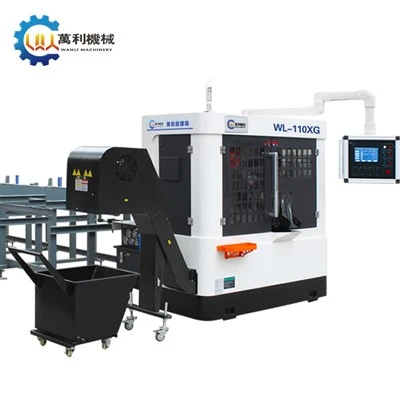
Hey there! As a supplier of Circular Sawing Systems, I often get asked about the vibration level of these systems. It's a crucial aspect that can significantly impact the performance, safety, and lifespan of the sawing equipment, as well as the quality of the cuts. So, let's dive right into it and explore what the vibration level of Circular Sawing Systems really means.
What is Vibration in Circular Sawing Systems?
Vibration in a circular sawing system refers to the oscillations or movements that occur during the sawing process. It can happen in different directions, like up - down, side - to - side, or even in a circular motion. These vibrations are caused by a variety of factors.
One of the main causes is the interaction between the saw blade and the material being cut. When the blade bites into the material, there's a mechanical force at play. If the material is uneven in density or has hard inclusions, it can cause the blade to jolt and vibrate. For example, when cutting a metal bar that has some internal flaws or inconsistent grain structure, the saw blade might experience sudden changes in resistance, leading to vibrations.
The design and condition of the sawing machine itself also contribute to vibration. If the bearings in the saw arbor are worn out, they won't provide a smooth rotation for the blade, resulting in increased vibration. Similarly, loose or misaligned components within the machine, such as the blade guard or the clamping mechanism, can cause the saw to vibrate more than it should.


Why Does Vibration Level Matter?
The vibration level of a circular sawing system matters for several reasons. Firstly, it has a direct impact on the quality of the cuts. High levels of vibration can cause the saw blade to deviate from its intended path, resulting in rough, uneven, or inaccurate cuts. This is a big no - no, especially in industries where precision is key, like aerospace or automotive manufacturing.
Secondly, vibration affects the lifespan of the saw blade. Excessive vibration puts additional stress on the blade teeth, causing them to wear out more quickly. This means you'll have to replace the blades more frequently, which can be a costly affair. And it's not just the blade; other parts of the sawing machine, such as the motor and the drive system, can also be damaged over time due to the constant shaking.
Safety is another major concern. High vibration levels can make the sawing machine difficult to control. It increases the risk of the operator losing their grip on the machine, which can lead to serious accidents. In addition, the vibrations can cause noise pollution, which is not only annoying but can also be harmful to the operator's hearing if they are exposed to it for long periods.
Measuring Vibration Levels
So, how do we measure the vibration level of a circular sawing system? There are specialized instruments available for this purpose, such as accelerometers. These devices can be attached to different parts of the sawing machine, like the blade, the motor, or the frame, to measure the acceleration of the vibrations. The data collected by the accelerometer is then analyzed to determine the amplitude, frequency, and direction of the vibrations.
The amplitude of the vibration refers to the maximum displacement of the vibrating part from its rest position. A higher amplitude usually means more severe vibrations. The frequency of the vibration indicates how often the oscillations occur per second. Some frequencies can be more harmful than others, depending on the resonance characteristics of the sawing machine and its components.
Controlling Vibration Levels
As a Circular Sawing Systems supplier, we're constantly looking for ways to control and reduce vibration levels. One of the ways is through proper machine design. We ensure that the sawing machines are built with high - quality components and precise engineering. For example, using better - quality bearings can provide a more stable rotation for the blade, reducing vibration.
The choice of saw blade also plays a crucial role. We offer a variety of saw blades that are designed to minimize vibration. These blades have special tooth geometries and coatings that help to reduce the friction between the blade and the material, resulting in smoother cuts and less vibration.
Proper maintenance of the sawing machine is essential. Regularly checking and tightening the components, lubricating the moving parts, and replacing worn - out parts can all help to keep the vibration level in check. For instance, if the blade is dull, it will require more force to cut through the material, which can increase vibration. So, sharpening or replacing the blade in time is important.
Our Circular Sawing System Offerings
We have a wide range of circular sawing systems to meet different customer needs. Our High speed cold cutting saw is a great option for those who need to cut through tough materials at high speeds. It's designed with advanced technology to minimize vibration and ensure precise cuts.
The Circular Saw Machine Fully Automatic is perfect for high - volume production. It offers a high level of automation, which not only improves efficiency but also helps to maintain a consistent vibration level during the sawing process.
And if you're looking for an automatic solution for metal cutting, our Automatic Circular Saw Metal Cutting Machine is a top - choice. It's equipped with features that reduce vibration and enhance the overall performance of the sawing process.
Let's Talk
If you're in the market for a circular sawing system and want to learn more about how we manage the vibration levels in our products, or if you have any other questions or requirements, don't hesitate to reach out. We're here to help you find the right solution for your business. Whether you're a small - scale workshop or a large - scale manufacturing plant, we've got the expertise and the products to meet your needs. So, let's start a conversation and see how we can work together to improve your sawing operations.
References
- Machinery's Handbook, Industrial Press Inc., 31st Edition
- Handbook of Vibration Engineering, CRC Press