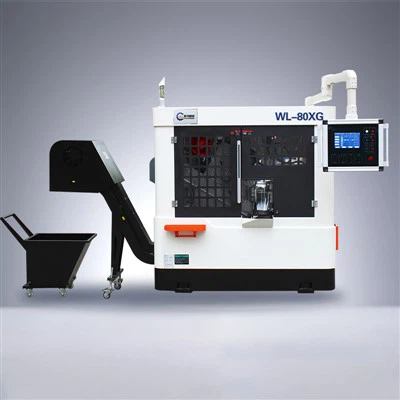
As a seasoned supplier of Machine Saw Circular, I've witnessed firsthand the transformative power of these remarkable tools in various industries. In this blog post, I'll delve into the working principle of a Machine Saw Circular, exploring its components, operation, and applications. Whether you're a professional in the manufacturing sector or a DIY enthusiast, understanding how these saws work is crucial for making informed decisions and achieving optimal results.
Components of a Machine Saw Circular
Before we dive into the working principle, let's take a closer look at the key components of a Machine Saw Circular. These components work together seamlessly to ensure efficient and precise cutting operations.
- Saw Blade: The saw blade is the heart of the Machine Saw Circular. It is typically made of high-speed steel or carbide-tipped teeth, which are designed to withstand the high rotational speeds and cutting forces. The teeth of the saw blade are shaped and arranged in a specific pattern to optimize cutting performance.
- Motor: The motor provides the power necessary to rotate the saw blade at high speeds. It is usually an electric motor, although some larger machines may use hydraulic or pneumatic motors. The motor's power rating determines the cutting capacity and speed of the saw.
- Arbor: The arbor is the shaft that holds the saw blade in place and transfers the rotational force from the motor to the blade. It is typically made of high-strength steel and is designed to withstand the high torque and vibration generated during cutting.
- Table: The table is the surface on which the workpiece is placed during cutting. It provides support and stability for the workpiece and allows for accurate positioning and alignment. The table may be adjustable in height and angle to accommodate different cutting requirements.
- Fence: The fence is a guide that runs parallel to the saw blade and helps to ensure straight and accurate cuts. It can be adjusted to different positions to accommodate different workpiece widths.
- Guard: The guard is a safety device that covers the saw blade to prevent accidental contact and protect the operator from flying debris. It is typically made of transparent plastic or metal and can be easily removed for blade replacement or maintenance.
Working Principle of a Machine Saw Circular
Now that we've familiarized ourselves with the components of a Machine Saw Circular, let's explore how it works. The working principle of a Machine Saw Circular can be divided into the following steps:


- Power On: The first step is to turn on the power switch to activate the motor. The motor starts rotating the arbor, which in turn rotates the saw blade at high speeds.
- Workpiece Placement: The workpiece is then placed on the table and aligned with the saw blade. The fence can be adjusted to ensure that the workpiece is positioned parallel to the blade for a straight cut.
- Cutting Operation: Once the workpiece is properly positioned, the operator slowly feeds the workpiece into the rotating saw blade. As the blade cuts through the workpiece, the teeth of the blade remove small chips of material, creating a smooth and clean cut.
- Chip Removal: During the cutting process, the chips of material generated by the saw blade are removed by a chip removal system. This system may include a dust collection hood or a vacuum cleaner to collect the chips and prevent them from accumulating on the table or in the saw's components.
- Completion of Cut: Once the cut is complete, the operator stops feeding the workpiece into the blade and turns off the power switch. The saw blade comes to a stop, and the workpiece can be removed from the table.
Types of Machine Saw Circular
There are several types of Machine Saw Circular available on the market, each designed for specific applications and cutting requirements. Some of the most common types include:
- Table Saw: A table saw is a stationary saw that is mounted on a table. It is typically used for making straight cuts in wood, plywood, and other sheet materials. Table saws are available in various sizes and power ratings, and they can be equipped with different types of blades for different cutting applications.
- Miter Saw: A miter saw is a specialized saw that is designed for making angled cuts, such as miters and bevels. It is typically used in woodworking, carpentry, and construction applications. Miter saws are available in manual and powered versions, and they can be equipped with different types of blades for different cutting materials.
- Circular Saw: A circular saw is a portable saw that is handheld or mounted on a stand. It is typically used for making straight cuts in wood, metal, plastic, and other materials. Circular saws are available in various sizes and power ratings, and they can be equipped with different types of blades for different cutting applications.
- CNC Circular Saw: A CNC circular saw is a computer-controlled saw that is capable of making precise and complex cuts. It is typically used in manufacturing and industrial applications, where high accuracy and repeatability are required. CNC circular saws are available in various sizes and configurations, and they can be programmed to cut different shapes and sizes of workpieces.
Applications of Machine Saw Circular
Machine Saw Circular are widely used in various industries and applications, including:
- Woodworking: Machine Saw Circular are essential tools in woodworking shops for cutting lumber, plywood, and other wood materials. They are used for making straight cuts, angled cuts, and crosscuts, and they can be used to create a variety of wood products, such as furniture, cabinets, and doors.
- Metalworking: Machine Saw Circular are also used in metalworking shops for cutting metal sheets, bars, and tubes. They are typically equipped with carbide-tipped blades that are designed to cut through metal quickly and efficiently. Metalworking applications include fabrication, welding, and machining.
- Plastic Fabrication: Machine Saw Circular are used in plastic fabrication shops for cutting plastic sheets, rods, and tubes. They are typically equipped with special blades that are designed to cut through plastic without melting or cracking. Plastic fabrication applications include signage, displays, and packaging.
- Construction: Machine Saw Circular are used in construction sites for cutting building materials, such as lumber, plywood, and metal studs. They are typically portable and easy to use, making them ideal for on-site cutting applications. Construction applications include framing, roofing, and siding.
Conclusion
In conclusion, the Machine Saw Circular is a versatile and powerful tool that is widely used in various industries and applications. Understanding its working principle, components, and types is crucial for making informed decisions and achieving optimal results. Whether you're a professional in the manufacturing sector or a DIY enthusiast, a Machine Saw Circular can help you complete your projects quickly, efficiently, and accurately.
If you're interested in purchasing a Machine Saw Circular for your business or personal use, I encourage you to explore our range of products. We offer a wide selection of high-quality Machine Saw Circular, including the Degree Manual Miter Saw Cutting Machine Universal, CNC metal cold circular saw machine, and Table Circular Saw Machine. Our team of experts is available to provide you with detailed information and guidance to help you choose the right saw for your needs.
Contact us today to learn more about our products and to discuss your specific requirements. We look forward to working with you!
References
- "Woodworking Machinery: A Comprehensive Guide." Woodworking Network.
- "Metal Cutting Tools: Principles and Applications." Industrial Press.
- "Plastic Fabrication Techniques." Society of Plastics Engineers.
- "Construction Equipment Handbook." McGraw-Hill.