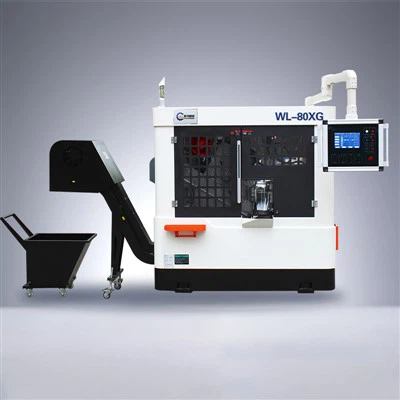
As a trusted supplier of Metal Bar Cut Off Machines, I often encounter inquiries from customers regarding the machine's capabilities, especially when it comes to cutting metal bars with internal defects. In this blog post, I'll delve into this topic, exploring the feasibility, challenges, and considerations associated with using our machines for such tasks.
Understanding Internal Defects in Metal Bars
Internal defects in metal bars can manifest in various forms, including porosity, inclusions, cracks, and segregation. Porosity refers to the presence of small voids or holes within the metal, which can occur during the casting or solidification process. Inclusions are foreign particles, such as oxides or sulfides, that are trapped within the metal matrix. Cracks, whether microscopic or visible, can propagate under stress and compromise the structural integrity of the bar. Segregation occurs when there is an uneven distribution of alloying elements within the metal, leading to variations in mechanical properties.
These defects can have a significant impact on the performance and durability of the metal bar. For example, porosity can reduce the strength and fatigue resistance of the bar, while cracks can act as stress concentrators and lead to premature failure. In industries where safety and reliability are paramount, such as aerospace, automotive, and construction, the presence of internal defects in metal bars is a serious concern.
Can a Metal Bar Cut Off Machine Cut Metal Bars with Internal Defects?
The short answer is yes, a Metal Bar Cut Off Machine can be used to cut metal bars with internal defects. However, several factors need to be considered to ensure a successful cutting operation.
1. Type of Defect
The type and severity of the internal defect play a crucial role in determining the machine's ability to cut the metal bar. Minor defects, such as small inclusions or isolated porosity, may not significantly affect the cutting process. Our machines are designed to handle a wide range of metal materials and can typically cut through bars with these types of defects without major issues.
On the other hand, large cracks or extensive porosity can pose challenges. Cracks can cause the bar to break or split during the cutting process, leading to uneven cuts and potential damage to the machine. In such cases, it may be necessary to adjust the cutting parameters or use specialized techniques to minimize the risk of breakage.
2. Cutting Method
The cutting method employed by the Metal Bar Cut Off Machine also affects its ability to cut metal bars with internal defects. There are several cutting methods available, including sawing, shearing, and abrasive cutting.
Sawing is a common method used for cutting metal bars. It involves using a circular saw blade to cut through the bar. Sawing is generally more precise and produces a cleaner cut compared to other methods. Our Circular Saw Machine for Cutting Metal is equipped with high-quality saw blades that can effectively cut through metal bars, even those with internal defects. However, if the defect is located near the cutting path, it may cause the saw blade to bind or break.
Shearing involves using a pair of blades to cut through the bar by applying a shearing force. Shearing is a fast and efficient method, but it may not be suitable for cutting bars with internal defects, especially cracks. Cracks can cause the bar to break unevenly during shearing, resulting in a poor-quality cut.
Abrasive cutting uses an abrasive wheel to cut through the bar. Abrasive cutting is suitable for cutting hard and brittle materials, but it can generate a significant amount of heat and dust. Internal defects can affect the cutting performance of the abrasive wheel and may cause it to wear out more quickly.
3. Machine Specifications
The specifications of the Metal Bar Cut Off Machine, such as the cutting capacity, power, and blade speed, also need to be considered. A machine with a higher cutting capacity and power can generally handle metal bars with internal defects more effectively. Additionally, adjusting the blade speed can help optimize the cutting process and reduce the risk of damage to the machine and the bar.
Challenges and Considerations
While it is possible to cut metal bars with internal defects using a Metal Bar Cut Off Machine, there are several challenges and considerations that need to be addressed.
1. Safety
Safety is always a top priority when operating a Metal Bar Cut Off Machine. When cutting metal bars with internal defects, there is an increased risk of breakage or flying debris. It is essential to wear appropriate personal protective equipment (PPE), such as safety glasses, gloves, and ear protection. Additionally, the machine should be properly maintained and inspected regularly to ensure safe operation.


2. Quality Control
Cutting metal bars with internal defects can affect the quality of the cut. To ensure a high-quality cut, it is important to implement a quality control process. This may include inspecting the bar before cutting, monitoring the cutting process, and inspecting the cut bar after cutting. Non-destructive testing methods, such as ultrasonic testing or X-ray inspection, can be used to detect internal defects in the bar before cutting.
3. Machine Maintenance
Cutting metal bars with internal defects can put additional stress on the Metal Bar Cut Off Machine. It is important to follow the manufacturer's recommended maintenance schedule to ensure the machine operates at its optimal performance. This may include regular cleaning, lubrication, and blade replacement.
Conclusion
In conclusion, a Metal Bar Cut Off Machine can be used to cut metal bars with internal defects, but several factors need to be considered to ensure a successful cutting operation. The type and severity of the defect, the cutting method, and the machine specifications all play a crucial role. By understanding these factors and taking appropriate precautions, it is possible to cut metal bars with internal defects safely and efficiently.
If you are in the market for a Metal Bar Cut Off Machine or have any questions about cutting metal bars with internal defects, please feel free to [contact us](insert contact information). Our team of experts is available to provide you with the information and support you need to make an informed decision. We also offer a wide range of Pipe Cutting Machine and Circular Saw Machine with Table to meet your specific cutting needs.
References
- ASM Handbook, Volume 6: Welding, Brazing, and Soldering. ASM International, 1993.
- Metal Cutting Principles. Peter Childs. Butterworth-Heinemann, 2000.
- Manufacturing Engineering and Technology. S. Kalpakjian, S. Schmid. Pearson, 2013.